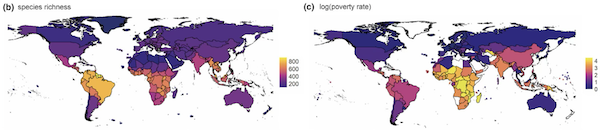
The mainstream narrative holds that countries rich in biodiversity can use this natural capital to reduce poverty. In theory, higher biodiversity ought to mean lower poverty. In practice, the opposite tends to be true. Countries with the highest levels of biodiversity also tend to have higher poverty rates. This paper explores how this paradox emerged. It finds that colonial and neoliberal structures have produced an inverted biodiversity–poverty relationship. Biodiversity-rich regions were more likely to be colonised, and less likely to have developed strong pre-colonial states, which further increased the likelihood of colonisation. Colonial rule locked these economies into the export of raw materials, creating high dependence on natural resource rents and weakening governance. Lower state capacity was associated with higher debt burdens and, ultimately, higher poverty rates. In short, Western European colonial powers disproportionately targeted biodiverse regions, creating poverty legacies that persist today. These patterns are not merely historical residues: they continue to be reinforced by contemporary global trade rules, particularly through unequal exchange relationships.
Leave a Reply